Mastering Rust Programming and Modern Memory Safety
Explore rust programming, memory ownership concepts, and high performance without garbage collection.

Rust programming is a modern systems software engineering approach that combines C and C++ execution speed with absolute memory safety guarantees at compile time. The language eliminates the Garbage Collector (GC) but still prevents fatal flaws like null pointers and data races through a strict ownership system.
As a web developer used to automatic memory management in JavaScript or TypeScript, touching a low-level systems language often feels intimidating. However, understanding how the Rust programming language works is actually the best technical investment you can make right now. You do not have to build an operating system right away to feel the benefits. The modern desktop application ecosystem based on Tauri to WebAssembly-based edge computing now relies on Rust's reliability.
Understanding Rust Programming and Memory Management Paradigms
By definition, the Rust programming language is a statically typed language designed to deliver high performance, fearless concurrency, and memory safety without burdening the runtime. To understand why its presence is so important, we need to dissect the three main schools of memory management in computer science.
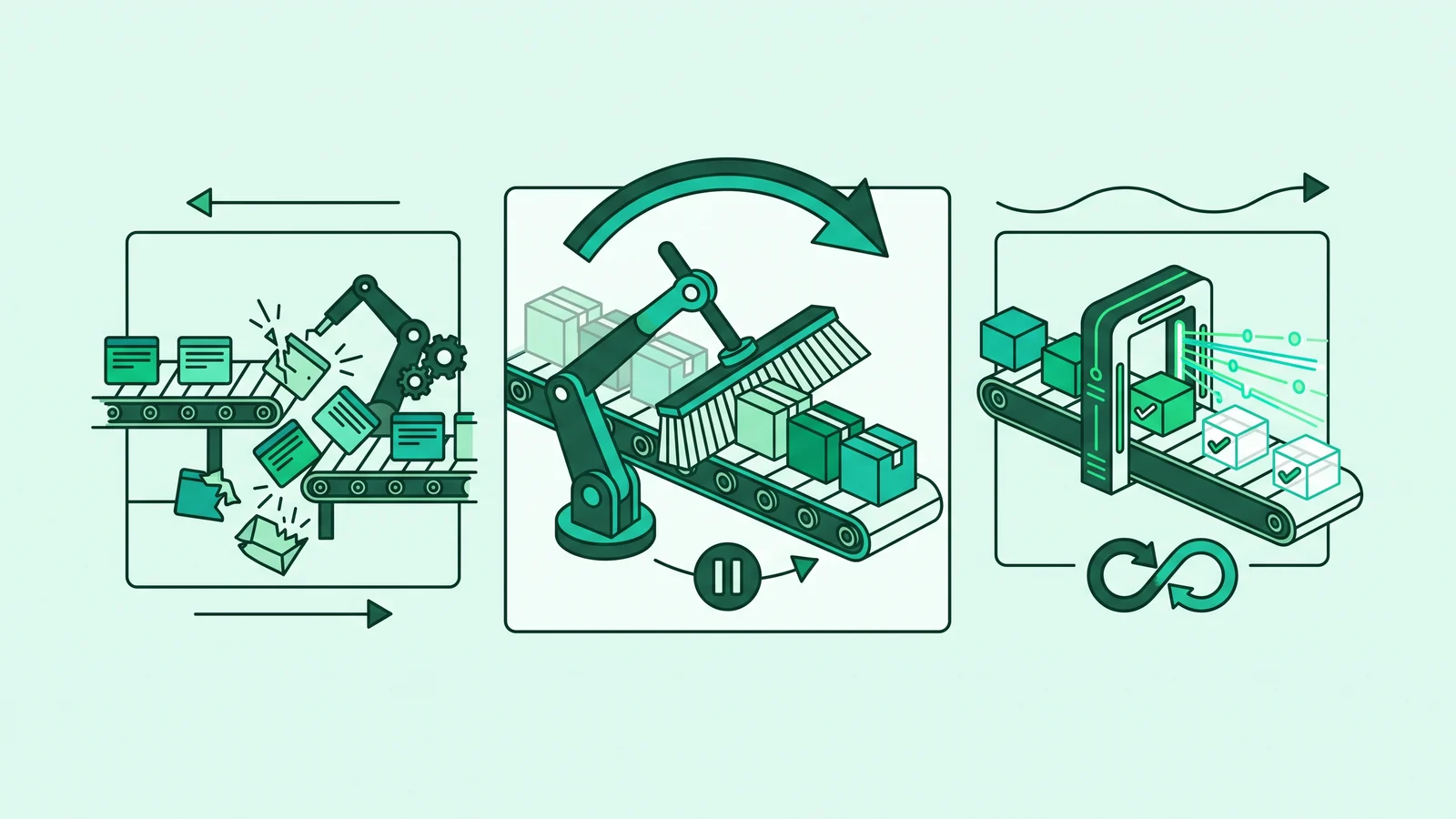
For decades, programmers had to choose between two extremes: full control with high risk, or high safety with a performance penalty.
Dario Benevento in his book Frontend Development (UIUX & Psychology) explains that high-level languages like JavaScript (through the V8 engine) and C# (through the .NET CLR) rely on a Garbage Collector with algorithms like mark-and-sweep to track and clean up unused objects in the heap. This approach frees our minds from memory addresses but demands compensation in the form of latency overhead and momentary execution pauses (GC pauses). Even in languages like C#, cleaning up unmanaged resources still requires explicit patterns like the IDisposable interface or using blocks.
Rust takes a third path. The compiler manages memory deterministically through the rules of ownership, borrowing, and lifetimes. When a variable goes out of scope, Rust automatically inserts memory cleanup instructions exactly at that point during compilation. There is no background process scanning memory while the application runs.
Why is the Industry Migrating to Rust?
The need for memory safety is no longer just an academic discussion. Data from Microsoft and Google shows that about 70% of fatal cybersecurity vulnerabilities (CVEs) stem from memory safety bugs in C and C++ codebases.
This situation prompted the United States Office of the National Cyber Director (ONCD) to publish an official report titled "Back to the Building Blocks: A Path Toward Secure and Measurable Software" in February 2024. The White House report explicitly calls on critical software developers to abandon memory-unsafe languages and switch to memory-safe ones. They place Rust as the top recommendation for systems programming.
The industry response moved very fast. The Linux kernel project has integrated Rust as an official companion language to C for building drivers and core subsystems. Based on the State of Rust Survey released in early 2026, global corporate adoption of Rust programming has reached 48.8%. Since the arrival of the Rust 2024 Edition (officially stable with version 1.85.0 on February 20, 2025) which brought features like async closures, RPIT lifetime capture rule refinements, and let chains, up to the stable 1.99.x line in late 2026, the language has become increasingly mature and ergonomic.
Visual Identity, Ferris the Mascot, and Learning Resources
Before stepping into lines of code, it is a good idea to know the unique culture behind this ecosystem. The official Rust programming language logo features a dark or bronze sprocket with a solid capital "R" in the center. This shape reflects mechanical engineering precision and hardware toughness.
Besides the official logo, the Rust community has a popular mascot named Ferris the Crab, a friendly orange crab. The name "Ferris" comes from the English word "ferrous" which means containing iron, aligning with the word Rust. Programmers in this ecosystem also call themselves Rustaceans, a clever pun on the word crustacean.
If you are looking for a structured basic curriculum, the main reference you must read is the official Rust programming language book by Steve Klabnik and Carol Nichols. The book, affectionately dubbed "The Book" by the community, is available for free on the official documentation site (doc.rust-lang.org/book). So the reading process does not overwhelm you, combine it with accelerated learning methods so you can absorb the abstract concepts inside more easily.
Understanding Core Concepts: Ownership, Borrowing, and Lifetimes
The most challenging and rewarding part of learning Rust programming is making peace with the Borrow Checker, the compiler component that oversees your memory traffic. For web developers, learning this mechanism is like taking an intensive computer architecture class. You must understand the difference between memory allocation on the stack (fast, fixed size) and the heap (dynamic, requires a pointer).
1. Ownership and Move Semantics
The basic rules of ownership in Rust are very straightforward:
- Each value in Rust has a variable as its owner.
- There can only be one owner at a time.
- When the owner goes out of scope, Rust immediately drops the value from memory.
In GC-based languages like JavaScript, when you copy a variable containing an object to a new variable, both point to the same memory address in the heap until the GC collects it. In Rust, copying data located on the heap (like the String type) will transfer its ownership (move semantics).

Why does s1 immediately become invalid after the let s2 = s1; line? If Rust let s1 and s2 point to the same heap memory, then when both exit the main() function, they would try to free the same memory address twice. This condition triggers a double free error that corrupts the memory structure. By instantly invalidating s1 (a move), Rust guarantees only s2 is responsible for cleaning up that memory.
2. Borrowing (Immutable vs Mutable References)
It would certainly be a hassle if every time we passed a variable into a function, its ownership moved and the original variable could no longer be used. To solve this, Rust provides a borrowing feature using the reference symbol (&).
The Golden Rule of the Borrow Checker: In any given scope, you can have multiple immutable references (&T) at once, OR exactly one mutable reference (&mut T). You cannot combine both at the same time. This simple rule eradicates potential data races right at the compilation level.
Practical Steps to Start with the Rust Ecosystem
One reason modern developers really like the Rust programming language is its built-in tooling. If in C++ you have to worry about configuring CMake, choosing a compiler, and downloading libraries manually, Rust wraps everything in one unified ecosystem.
Toolchain Installation via Rustup
Download and run rustup, the official Rust version and toolchain manager. Open your terminal (on Linux, macOS, or Windows via WSL/MSVC) and run the following command:

After the process is complete, make sure the compiler (rustc) and package manager (cargo) are installed correctly:
Getting to Know Cargo, Clippy, and Rustfmt
When you install Rust, you automatically get Cargo (the dependency and project manager connected to the official Crates.io package registry), Clippy (a smart linter that gives suggestions to make code more idiomatic), and Rustfmt (an automatic code formatter according to community standards). Your team no longer needs to argue about code styling.
Creating and Running Your First Project
Create a new project using Cargo, enter its directory, and run the application:
To check code quality and format it before saving changes to the repository, make it a habit to run these two commands:
Four Common Beginner Traps When Learning Rust
Moving from a high-level language to Rust requires a shift in thinking. Here are four mistakes beginners make most often and how to avoid them:
- Fighting the Borrow Checker by Forcing Classic OOP Patterns
Beginners with Java or C# backgrounds often try to build data structures with circular references, like doubly linked lists or parent-child object patterns that store mutable references to each other. The Borrow Checker will definitely reject this design because the object lifetime becomes ambiguous. Design separated relational data models, use indices on arrays or vectors (
Vec<T>), and use smart pointers likeRc<RefCell<T>>(for single-thread) orArc<Mutex<T>>(for multi-thread) only if absolutely necessary. - Over-reliance on
.clone()When facing memory ownership error messages from the compiler, the most tempting shortcut is to attach the.clone()method to blindly duplicate data. This habit does make the code pass compilation, but it triggers performance penalties and useless heap allocations. Learn how to pass memory slices like&stror references&Tinstead of copying the entireString. - Abusing
.unwrap()in Production Code Rust manages the absence of values and potential failures through theOption<T>andResult<T, E>types. Calling.unwrap()carelessly will crash the application instantly (panic) if the received value turns out to be empty (None) or fails (Err). Handle these values safely using pattern matching (match),if letconstructs, or the question mark error propagation operator (?). - Rushing to Open
unsafeBlocks When impatient with the Borrow Checker rules, some beginners are tempted to wrap their code with theunsafe {}keyword. In fact,unsafeblocks are only intended for low-level hardware integration or calling Foreign Function Interfaces (FFI). You can and should write almost all modern application logic using safe Rust.
Do not treat error messages from rustc as roadblocks. Think of the Rust compiler as a senior coworker strictly auditing your code. Every time the compiler rejects your code, it means you just avoided a fatal memory bug that usually only explodes when the application runs on a production server.
Rust's Relevance for Web Developers: From Tauri to Edge Computing
What is the benefit for a frontend or fullstack web developer to learn a systems language? The answer lies in two things: sharp memory architecture analysis and open access to modern web infrastructure.
When you understand the memory ownership system in Rust, the way you write code in JavaScript, TypeScript, Python, or C# will be much more mature. You become sensitive to when heap allocations happen behind the scenes, how object lifecycles operate, and how to prevent hidden memory leaks.
Rust is also the main foundation for two important technologies in the web ecosystem today:
- Lightweight Desktop Apps with Tauri: If we previously wrapped web applications using memory-hungry Electron, now you can switch to Tauri. This framework combines modern web interfaces with a Rust-based system backend to produce cross-platform desktop applications that are very lightweight and save RAM.
- Serverless Computing & WebAssembly (WASM): Rust has first-class compilation support for WebAssembly. You can write heavy computing functions in Rust, compile them into WASM modules, and run them at high speed on platforms like Cloudflare Workers for serverless edge architecture. This approach is highly critical when designing an efficient modern edge serverless backend architecture.
Frequently Asked Questions (FAQ)
Because Rust forces programmers to think about memory allocation details (the difference between stack and heap) and variable lifetimes from the very first line of code. These concepts are usually hidden automatically by the Garbage Collector engine in languages like JavaScript, Python, or C#.
Not instantly to replace legacy codebases that have been running for decades. However, for developing new systems projects like operating system components, cloud infrastructure, and networking engines, the industry now prioritizes Rust because of its memory safety guarantees.
Go has a Garbage Collector and a built-in runtime that handles concurrency (Goroutines), making it very fast to learn for building backend microservices. In contrast, Rust does not use a Garbage Collector at all and is intended for extreme computing performance, low-level system manipulation, embedded devices, and modern desktop applications.
Rust eliminates the concept of null values (null pointers). Instead, the absence of a value is handled safely through the built-in Option<T> enum type which contains two variants: Some(T) if the value is available, or None if it is empty. The compiler requires you to check both possibilities, preventing NullPointerException errors.