Practical Formative Assessment Examples for Teachers
Practical formative assessment examples and strategies to improve student feedback in classrooms.
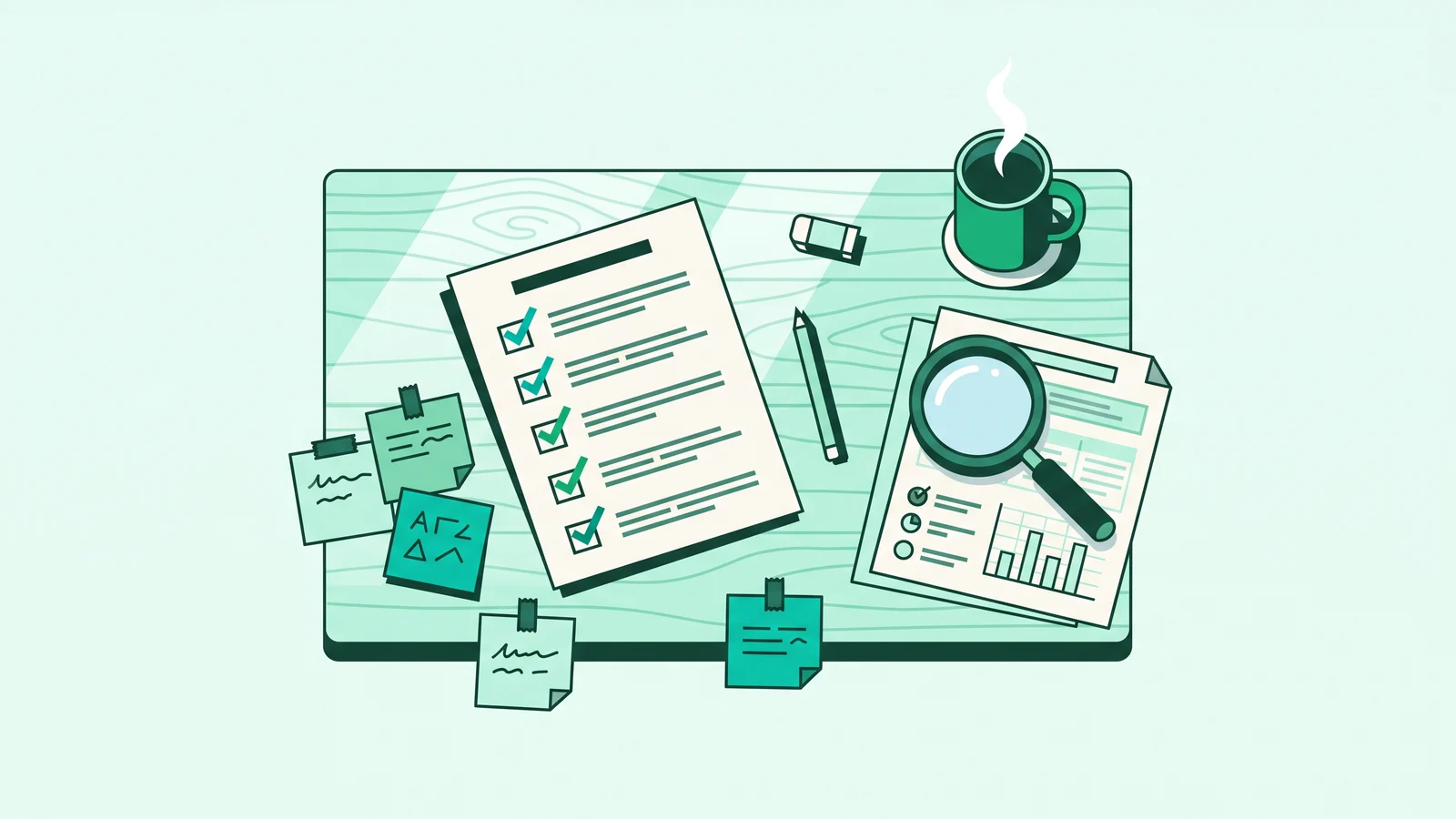
Formative assessment is an evaluation process integrated directly into teaching and learning activities to monitor student progress, identify learning obstacles, and provide continuous feedback. Various formative assessment examples in the classroom include exit tickets, anecdotal notes, prompt discussions, performance observation rubrics, and self-assessment sheets that do not count toward the final report card grade.
Many educators still mistakenly equate this assessment with daily quizzes in the form of multiple-choice worksheets. However, its main essence is not to judge students through a series of quantitative numbers. Elsi Sirampun and Hermin, in their book Learning Models: Theory, Practice, and Innovation, explain that this assessment acts as a monitoring radar for teachers and a mirror for students during learning activities.
When we shift our perspective from merely collecting grades to helping with feedback, the classroom atmosphere changes drastically. Students no longer hide their lack of understanding out of fear of getting a failing grade in the grade book.
Pedagogical Nature and Latest Regulations in Merdeka Curriculum
The Center for Curriculum and Learning, through the 2025 Revised Edition of the Learning and Assessment Guide, establishes that the proportion of formative assessments must be larger than summative assessments. This latest regulation enforces one vital rule: scores from formative assessments are not processed and not included in the final report card grade calculation. Report cards come purely from summative assessment results.
Why is this separation so strict? Prof. Ade Tuti Rochayati Rosa, in the book Kurikulum Merdeka Belajar, explains that evaluating during the learning process aims to produce descriptive and meaningful qualitative feedback. When formative numbers are averaged into the report card, the student's practice space turns into a judgment space. Students hesitate to ask questions and choose to cheat to secure their practice scores.
Pedagogically, this assessment serves two main functions:
- Assessment for Learning (AfL): Helps teachers improve teaching strategies, modify methods, and adjust instructions directly in the middle of a lesson.
- Assessment as Learning (AaL): Positions students as active learners who monitor their own understanding through self-reflection and peer assessment.
Both functions blend closely with the Deep Learning approach. The Deep Learning Development Team (TPPM), in the book Deep Learning, states that process evaluation must guide students across three mastery levels: conceptual understanding, real context application, and metacognitive reflection. This approach honors each individual through a complete exercise of mind, heart, feeling, and body.
Comparison of Formative and Summative Assessment Examples
To avoid overlap when designing Merdeka teaching modules, we need to distinguish the working boundaries between process evaluation and final evaluation. Understanding formative and summative assessment examples side by side will make it easier to choose the right instrument according to the day's goals.
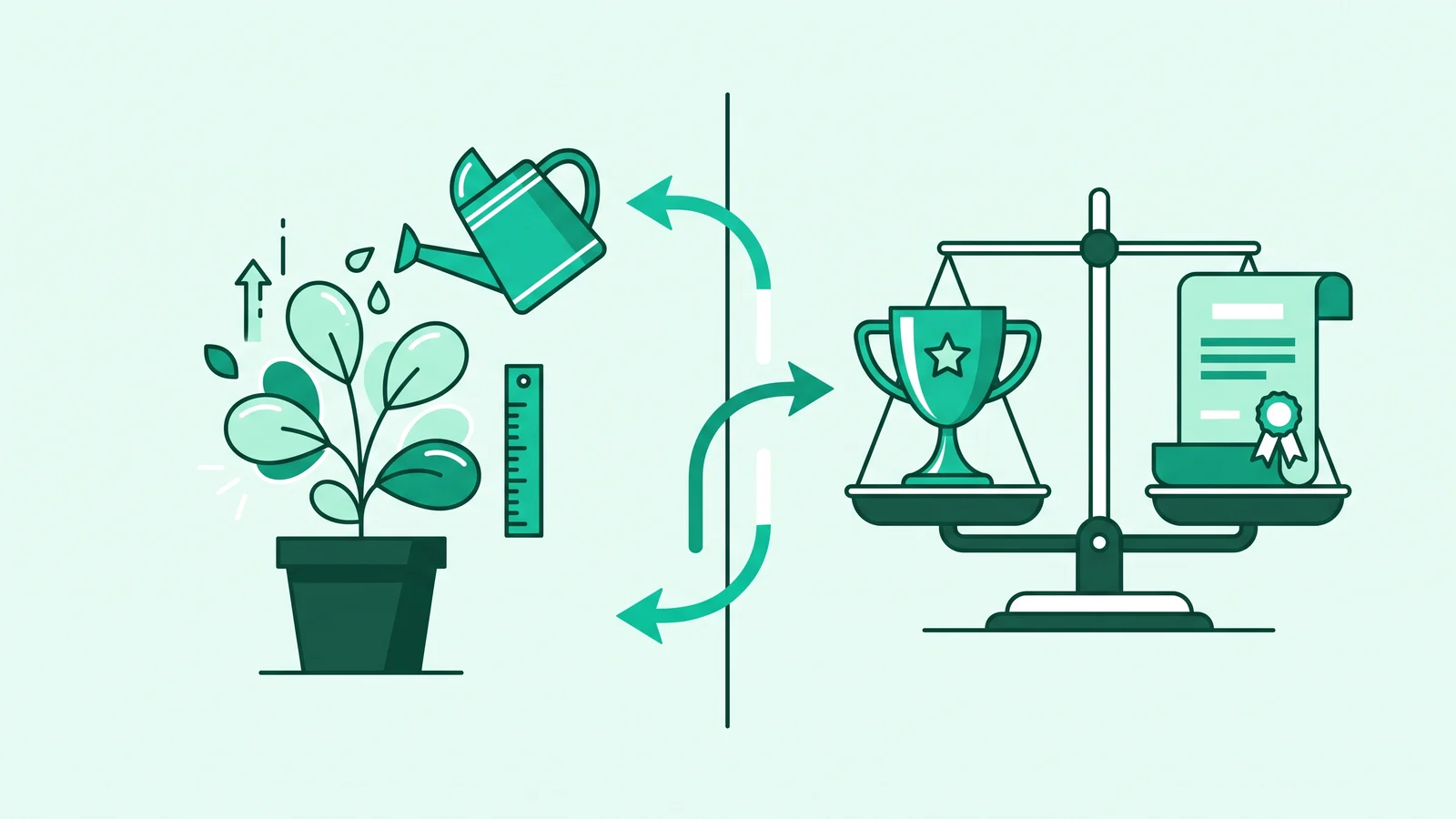
Here is a matrix of fundamental differences along with their instrument forms based on the 2025 Revised Edition of the Learning and Assessment Guide:
Never combine daily formative practice scores with summative exam scores to find the report card average. This practice damages the validity of the student's final achievement and destroys their psychological safety when learning new concepts.
Practical Flow of Formative Assessment Execution
Running formative evaluations does not mean teachers must carry a stack of thick rubric files every day. You can integrate it flexibly into your daily teaching rhythm through the following four stages:
Formulating Achievement Criteria (KKTP)
Determine success indicators right when you break down Learning Outcomes and Learning Objectives. Use a criteria description approach, simple rubrics, or easily observable grade intervals. Simply set 3 to 4 essential indicators for one meeting.
Collecting Learning Evidence
Observe the students' thinking and working processes during class activities. Learning evidence does not have to be written answer sheets. You can capture proof of understanding through how students answer oral questions, their arguments during group discussions, or hand gestures when asked to signal understanding.
Providing Immediate Descriptive Feedback
Give a response immediately once you observe the learning evidence. Avoid empty comments like "Very good" or "Fix this." Use feedback that points toward competency improvement (feed-forward), so students know exactly which parts are correct and what steps to fix.
Following Up with Differentiation
Use classroom findings to make instructional decisions on the spot. If half the class is still confused about basic material concepts, delay the plan to move to a new chapter. Provide gradual support (scaffolding) with visual aids for the struggling group, while giving contextual application challenges to proficient students.
Various Formative Assessment Examples by Education Level
Every developmental phase requires a different observation approach. An effective instrument for fifth graders is certainly not relevant if forced upon early childhood students. Here is a guide to its application based on education levels.
1. Formative Assessment Examples for Early Childhood and Kindergarten (Foundation Phase)
At the early childhood education level, evaluation does not use written tests or forced reading, writing, and arithmetic. The 2025 Revised Edition of the Learning and Assessment Guide emphasizes that teachers observe children naturally when they are engaged in free or guided play.
When compiling formative assessment examples for early childhood or kindergarten formative assessment examples, focus your instruments on achieving foundation skills: emotional regulation, independence, gross and fine motor skills, tactile perception, and receptive and expressive language skills.
Here are three authentic instruments ready to be applied in Foundation Phase classes:
- Anecdotal Notes: Short notes about unique events or behaviors of children that appear suddenly during center activities or free play. Write objective facts without judgment labels.
- Example note: "While playing with blocks on the carpet, Raka saw Dito's block tower fall. Raka took three of his wooden blocks, handed them to Dito, and then invited his friend to stack the blocks together. (Indicator: Recognizing friends' emotions and showing prosocial behavior)."
- Sequential Photo Documentation and Artwork: Teachers photograph three stages of a child creating, for example, when squeezing playdough, forming balls, and assembling them into animal shapes. Behind the photo or artwork, the teacher writes the child's original sentence when describing their creation to record expressive vocabulary development.
- Play Activity Observation Checklist: A simple table containing the child's name and three daily indicators observed during motor obstacle activities or colored sand play. Example indicators: (1) Able to share toys with friends, (2) Willing to wait their turn in line, (3) Can hold a paintbrush correctly.
2. Formative Assessment Examples for Elementary School (Phases A, B, and C)
Entering elementary school, students' cognitive capacity and independence develop rapidly. We can divide the application of elementary formative assessment examples into three time points within one lesson: the beginning, middle, and end of the session.
A. Beginning of Learning (Readiness Diagnostic Assessment)
Evaluation in the first few minutes serves to check the mastery of prerequisite concepts before entering the core material.
- Visual Prompt Questions: The teacher displays an image or a short puzzle related to previous concepts to test learning readiness. Students' verbal answers immediately map out who has mastered the prerequisite material and who still has misconceptions.
- Quick Thumbs Signal (Thumbs Up/Down): The teacher reads three short statements related to the day's topic. Students raise their thumbs up if they agree and down if they disagree. In seconds, the teacher immediately sees the distribution of initial understanding in the room.
B. During the Learning Process
When students are exploring material through Problem Based Learning (PBL) stages or science experiments, the teacher walks around monitoring their thought processes.
- Experiment Observation Rubric: When students conduct simple science experiments and then discuss in small groups, the teacher carries a clipboard containing a three-column observation rubric (Not Yet Visible, Beginning to Develop, Proficient). The teacher monitors students' critical reasoning and provides direct feedback on the spot.
- Writing Self-Assessment Checklist: A.A.I.N. Marhaeni and Luh Putu Artini, in the book Authentic Assessment in English Language Learning, demonstrate the use of structured checklist sheets when Phase C students draft essays. Before submitting descriptive text, students check their own writing using the following guide:
C. End of Learning (Closing Reflection)
Ten minutes before the bell rings is a critical moment to verify what truly stays in the students' minds.
- 3-2-1 Exit Ticket: Distribute small memo papers to each student. Ask them to write down:
- 3 new things they just understood today.
- 2 interesting things they want to learn more about.
- 1 question or part of the material that is still confusing.
These memo papers are collected as students walk out the classroom door. The teacher simply needs a short time at their desk to sort the papers into three piles: fully understood group, partially understood group, and the group needing special guidance at the next meeting.
You do not need to print exit ticket sheets every day. Use a small whiteboard in the corner of the classroom where students stick colorful memo papers, or ask them to write it at the very bottom of their daily notebooks before closing them.
Empowering Metacognition and Error-Friendly Classrooms
Much literature only positions formative assessment as a teaching tool (Assessment for Learning). In reality, the biggest leap in learning achievement occurs when we activate the Assessment as Learning function, which trains children's metacognitive abilities.
Metacognition is the student's awareness to monitor, evaluate, and regulate their own way of thinking. When an elementary student checks their writing draft using a self-checklist, or grades a friend's work using a peer assessment rubric, they are absorbing quality standards into themselves. They no longer rely entirely on teacher validation to know whether their work is good or not.
However, such honest reflection is impossible to grow in a classroom full of fear. Formative evaluation demands the absolute requirement of psychological safety. Teachers must build a classroom culture that views thinking errors as valuable data for learning, not academic disgrace punished with a failing grade.
This principle also becomes key when teaching in inclusive classrooms alongside students with special educational needs. Referring to the 2025 Revised Edition of the Learning and Assessment Guide, formative assessment functions as a flexible adaptive compass. A special education high school student in Phase E, for example, can participate in learning using Phase C material targets based on their functional assessment results. We adapt the instrument to the child's real developmental phase, rather than forcing their chronological age target.
Four Common Traps and Practical Solutions
Even though the concept is simple, implementation in the field often deviates from the initial goal. Here are four of the most frequent mistakes in schools along with their corrective steps:
- Equating Formative Assessment with Small Written Quizzes Many teachers feel they have not conducted an assessment if they have not distributed written question sheets. As a result, learning time is spent completing worksheets and teacher break time is spent correcting stacks of paper. Change this habit by increasing non-test techniques such as performance observation, meaningful conversations, interactive games, or visual concept mapping.
- Providing Delayed or Abstract Feedback Returning student work a week after finishing a topic provides no corrective impact because the child's focus has already moved to another chapter. Give specific feedback right then. An effective example sentence: "Your main idea is well-sequenced. In the second paragraph, try adding a conjunction so your story transition is smoother."
- Trapping Yourself in Complex Rubric Administration Creating a rubric table with many criteria for dozens of students in a single lesson is hard to do consistently. Simplify your instruments. You can use a one-page checklist matrix with 3 to 4 key indicators repeatedly throughout one teaching module unit.
- Ignoring Assessment Result Follow-Up Collecting exit tickets and letting them pile up in a desk drawer without changing tomorrow morning's teaching plan makes the assessment lose its meaning. If the exit ticket results show most students are still confused about basic concepts, hold the material pace and open tomorrow's meeting with a redemonstration or focused support.
Frequently Asked Questions (FAQ)
No. Based on the 2025 Revised Edition of the Learning and Assessment Guide, the numerical grades on the report card are purely processed from summative assessment results. Notes from formative assessments are only used by teachers as supporting information when drafting the narrative description of students' competency achievements.
Diagnostic assessment (now called initial learning assessment) is part of the formative assessment cycle. The difference lies in its timing and function: initial assessment is conducted specifically before designing teaching modules or starting a new topic to map student readiness, while process formative assessment is carried out throughout the learning activities.
Create a simple rubric or checklist sheet with 3 to 4 essential indicators that you can use repeatedly throughout the learning unit. For quick classical verification, use oral techniques, thumb gestures, or short anecdotal notes on a device for a few students on a rotating basis every day.
Formative assessment can be done at the beginning of learning to check prerequisite concept readiness, in the middle of the process while students explore or have group discussions, and at the close of the session through brief reflections like exit tickets.