The History of Accelerated Learning: Origins & Development
Explore the history of accelerated learning from Suggestopedia to modern brain-friendly methods.
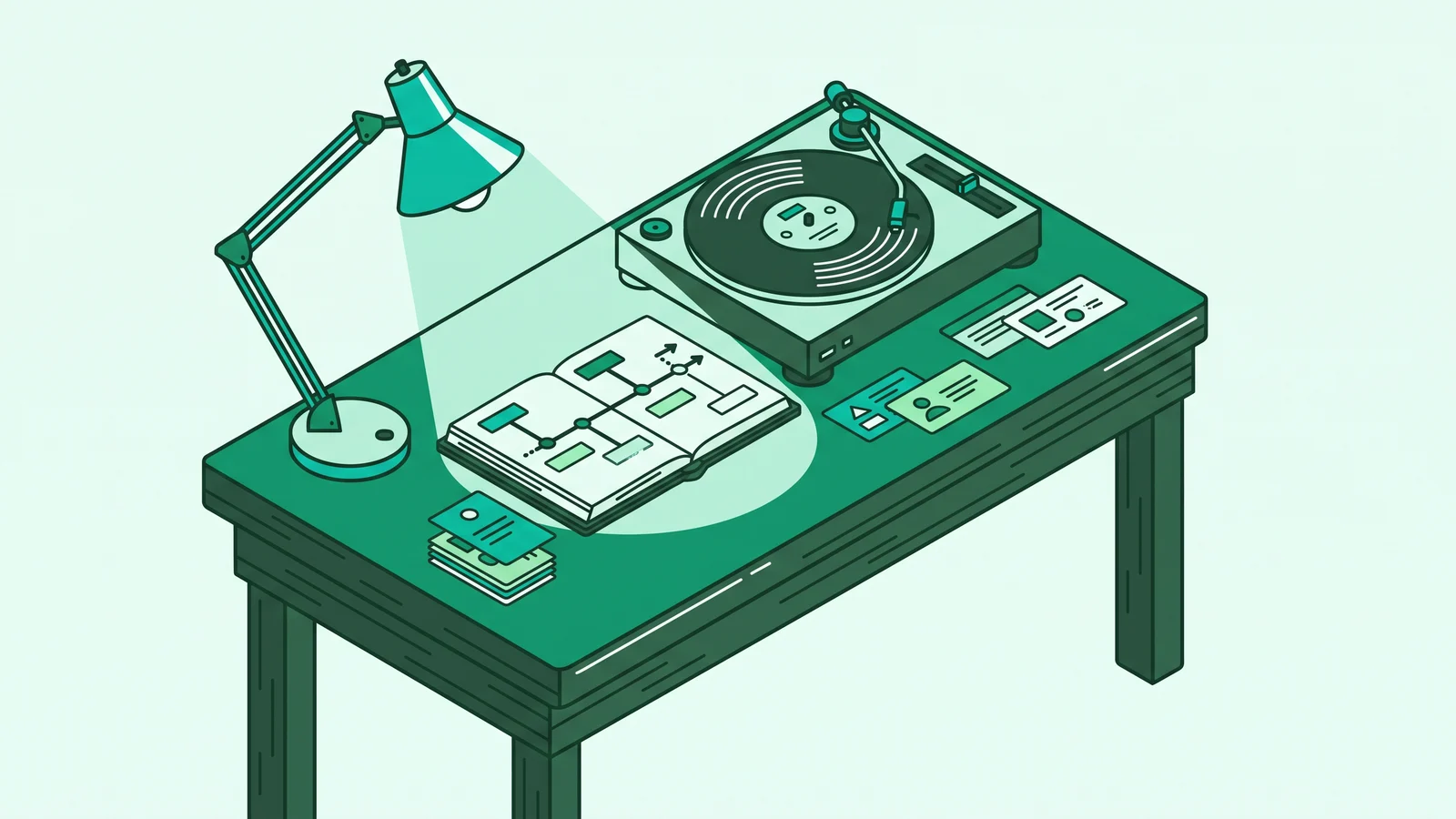
The history of Accelerated Learning traces back to the clinical experiments of Suggestopedia by Bulgarian psychiatrist Dr. Georgi Lozanov in the late 1960s. This methodology combines controlled relaxation, calming rhythmic music, and multisensory engagement to break down psychological barriers in students before evolving into a modern brain-friendly learning approach.
As an elementary school teacher, I often meet fellow educators who equate the concept of accelerated learning with "acceleration classes" or programs that shorten study periods from three years to two. This assumption is incorrect. Accelerated learning is not rushed curriculum cramming. It is a holistic philosophy and methodology that aligns teaching rhythms with how the human brain naturally works.
When emotional stress in the classroom drops and all five senses actively work, students understand and store concepts in their long-term memory much faster. Understanding the origins and development of this approach helps us design learning experiences that are humane, meaningful, and free from forced passive memorization.
History of Accelerated Learning: Origins and Evolution Since the 1960s
The journey of this fast learning method crosses geopolitical borders and academic disciplines. The interactive classroom activities we apply today actually began in psychiatric laboratories in Eastern Europe during the Cold War.
1. 1960s to 1970s: The Birth of Suggestopedia Behind the Iron Curtain
The primary roots of this movement were planted by Dr. Georgi Lozanov, a Bulgarian doctor, psychiatrist, psychotherapist, and educator. Through clinical research summarized in his book Suggestology and Outlines of Suggestopedia (1978), Lozanov studied the limits of human memory capacity and the main causes of cognitive fatigue in the classroom.
Lozanov concluded that rigid classical teaching systems often instill negative suggestions in learners. The fear of making mistakes, test anxiety, and the assumption that learning materials are difficult form an "affective filter" or mental barricade that blocks new information from entering.
To dismantle these mental barricades, Lozanov designed Suggestopedia with three main instruments:
- Controlled relaxation (concert pseudo-passiveness): Students are conditioned into a relaxed physical state, while their minds remain alert and receptive.
- Classical music with a largo tempo: Lozanov used Baroque music compositions with a tempo of about 60 beats per minute. This rhythm synchronizes the heart rate and guides brainwaves into an Alpha state, which is ideal for absorbing material.
- Positive suggestion and environmental orchestration: Teachers arrange the classroom to feel warm, provide affirmations that the human brain's capacity is vast, and combine rhythmic text reading with dramatic intonation.
The results of Lozanov's experiments in foreign language teaching surprised academics. Adult learners could absorb and remember hundreds of new vocabulary words in a matter of days without experiencing the mental fatigue common in traditional memorization methods.
2. 1974 to 1980s: Transition to the West and the SALT Community
News of the success of Lozanov's method in Bulgaria crossed the borders of the Eastern Bloc and attracted the attention of academics in the United States. In 1974, three American educational researchers, Donald Schuster, Ray Benitez-Bordon, and Charles Gritton, founded the Society for Accelerative Learning and Teaching (SALT), an academic organization that would later transform into the International Alliance for Learning (IAL).
Through this community, the terms accelerative learning and accelerated learning were officially adopted to translate and expand Lozanov's method to fit Western classroom cultures.
In 1979, journalists Sheila Ostrander and Lynn Schroeder published a popular book titled Superlearning. This book skyrocketed the concept of fast learning to the general public and triggered massive adoption by corporate trainers. However, Dr. Lozanov criticized various commercial simplifications in the West, which he felt overly simplified his original clinical Suggestopedia procedures.
3. 1980s to 1990s: The MASTER Framework and Quantum Learning Wave
Entering the 1980s, the concept of accelerated learning no longer relied solely on suggestion techniques and classical music. Practitioners began to pair it with neuroscience findings, mind mapping, and the Multiple Intelligences theory introduced by Howard Gardner in 1983.
Two of the most influential milestones during this period came from Colin Rose and Bobbi DePorter:
- The MASTER Framework by Colin Rose (1985 & 1997): British educator Colin Rose published Accelerated Learning (1985) and updated it through Accelerated Learning for the 21st Century (1997) with Malcolm J. Nicholl. Rose translated multiple intelligences theory and brain science into six practical steps called MASTER: Mind, Acquire, Search out, Trigger, Exhibit, and Reflect. For fellow teachers who want to see its application in elementary schools, I have put together an example of an Accelerated Learning Lesson Plan Grade 5: MASTER Syntax.
- Quantum Learning by Bobbi DePorter (1992): In the United States, Bobbi DePorter integrated Lozanov's suggestology principles into a youth camp program called SuperCamp. She documented this experience in the popular book Quantum Learning: Unleashing the Genius in You (1992) and Quantum Teaching (1999) alongside Mark Reardon and Sarah Singer-Nourie. In Indonesia, this book became a popular reference for the joyful learning movement in the early 2000s.
4. The 2000s: Humanistic Approach and Dave Meier's SAVI
Entering the new millennium, the focus of accelerated learning shifted heavily toward active training design and freeing learners from physical passivity. The central figure of this era is Dave Meier through his famous book, The Accelerated Learning Handbook (2000).
Meier sharply criticized conventional education and training systems that forced people to sit quietly for hours listening to one-way lectures. According to Meier, learning is not a process of passively swallowing information, but an act of active meaning creation involving the whole body and mind.
Meier simplified the learning flow into a four-stage cycle (Preparation, Presentation, Practice, and Performance) and introduced the SAVI multisensory approach:
- Somatic: Learning by moving and doing things physically.
- Auditory: Learning by talking, discussing, and listening.
- Visual: Learning by observing pictures, diagrams, and real demonstrations.
- Intellectual: Learning by solving problems, reflecting, and organizing logic.
5. 2010s to 2020s: Modern Neuroscience Corrections and Merdeka Curriculum
Over the last two decades, advances in cognitive neuroscience revised several old assumptions from the 1970s and 1980s. The Brain-Compatible Learning approach popularized by Eric Jensen showed that the human brain works as an integrated system, not in a rigid "left brain versus right brain" dichotomy.
The same applies to the VAK (Visual, Auditory, Kinesthetic) learning style assumptions that were often used to strictly label and separate students. Modern research confirms that humans do not learn through just a single sensory channel. Instead, the fastest and strongest learning happens when teachers activate multimodal neural networks simultaneously, exactly as suggested by the SAVI combination and the Universal Design for Learning (UDL) framework.
In Indonesia, this evolution found an appropriate stage in the Merdeka Curriculum. The principle of low stress, high challenge in brain-friendly learning goes hand in hand with the spirit of Deep Learning, differentiated instruction, and creating an emotionally safe school climate.
Timeline of Accelerated Learning Evolution
To help you map the focus shifts over time, observe the comparison across periods in the table below:
Why Does Fast Learning Actually Result in Deep Learning?
Many education observers misunderstand the word accelerated. They worry this method only produces students who instantly memorize formulas on the surface (surface learning), only to forget them the next day.
If we look back at the research from Lozanov to Meier, the accelerated aspect is not about cutting class hours, but rather the process of building understanding in the brain. In stressful traditional classes, stress responses block high-level cognitive processing. Students need repeated time to understand a single concept because their mental energy is drained by trying to overcome boredom or fear.
In contrast, when the classroom atmosphere is joyful and material is presented through visual experiences, physical movement, and intellectual discussion, the brain is in an optimal state ready to learn. Information does not just stop at working memory; it directly binds to long-term memory because it has emotional anchors and real experiences. This is a strong reason why the Position of Accelerated Learning in Education acts as a direct bridge to Deep Learning.
Concrete Steps to Apply SAVI and MASTER Principles in Class
Knowing the history without practicing it will certainly not change our classroom atmosphere. You can blend Dave Meier's four-stage cycle and Colin Rose's MASTER framework into your daily teaching modules through these steps:
1. Mental and Emotional Preparation (Mind)
Don't open the textbook or write formulas on the board the moment class starts. Use the first few minutes to lower students' tension, build a sense of safety, and spark curiosity (a hook). You can play calming instrumental music as students enter the room, do light stretching, or open the lesson with a contextual story close to their daily lives.
2. Multisensory Acquisition (Acquire & Search)
Deliver core concepts by fully involving SAVI elements. Instead of giving long one-way lectures, combine verbal explanations (Auditory) with colorful infographics (Visual), invite students to move between observation posts in corners of the room through a gallery walk activity (Somatic), and provide trigger questions that challenge them to find patterns or conclusions together with their groups (Intellectual).
3. Elaboration and Memory Triggers (Trigger & Practice)
Provide space for students to process raw information into their own understanding. Ask them to summarize material using branching mind maps, design short song mnemonics, or perform simple role-plays. These activities of reshaping information are very effective at locking concepts into long-term memory.
4. Exhibition and Metacognitive Reflection (Exhibit & Reflect)
Close the learning cycle by asking students to exhibit their understanding, for example through peer teaching techniques or mini project presentations. After that, take a brief moment for metacognitive reflection. Ask students to answer two questions in their notebooks: "What did I understand today?" and "What method helped me the most in understanding this topic?"
Common Mistakes When Adopting Accelerated Learning
While guiding fellow teachers in designing innovative teaching materials, I noted three traps that most often cause the application of this method to miss its mark:
Three Practical Errors Educators Must Avoid:
- Equating It with Grade Skipping: Do not use this approach to force students to complete a two-semester curriculum target in a short time. The main goal is the quality of understanding and psychological comfort for all students, not just an administrative acceleration program for intellectually gifted children.
- The "Just Play Classical Music" Trap: Playing Mozart or Baroque music in class will not help if teachers still dictate material one-way and scold students who ask questions. Music is merely a facilitator for brain alpha waves; the main engine of this method remains active multisensory engagement.
- Ignoring Cognitive Overload: Assuming students can absorb material quickly, some teachers actually pour out too much information at once. Continue to apply material chunking techniques into smaller parts and provide a brain break every 15 to 20 minutes of intensive learning to allow for memory consolidation.
For those who want to see other practical technique variations in the classroom, please read my review on 7 Accelerated Learning Methods: Fast & Effective.
Frequently Asked Questions (FAQ)
Its early foundation was pioneered by Dr. Georgi Lozanov, a Bulgarian psychotherapist and educator in the late 1960s through the Suggestopedia method. His discovery principles were later further developed into the modern Accelerated Learning movement by figures such as Colin Rose, Bobbi DePorter, and Dave Meier.
Quantum Learning is one of the popular branches from the larger family of Accelerated Learning. Bobbi DePorter adapted Dr. Lozanov's suggestology principles and neurolinguistic techniques into a youth camp format called SuperCamp, which was later published as a book called Quantum Learning in 1992.
In his clinical experiments in Bulgaria, Dr. Lozanov found that calm rhythmic classical music with a largo tempo of around 60 beats per minute helped lower affective filters or stress. This relaxed yet alert condition makes it easy for learners to absorb hundreds of foreign language vocabulary words without cognitive fatigue.
The Merdeka Curriculum demands learning that is student-centered, joyful, differentiated, and directed toward Deep Learning. The frameworks within Accelerated Learning, such as the SAVI multisensory approach and MASTER syntax, provide practical tools for teachers to accommodate students' diverse learning profiles without creating psychological stress in the classroom.