Effective Study Methods Backed by Cognitive Science
Discover science-backed study techniques that improve long-term memory and deep comprehension.

Applying effective study methods is not about sitting for hours memorizing text or coloring books with highlighters. It is a process of self-regulated learning that involves active cognitive effort. Proper studying forces the brain to process, connect, and recall information independently to move it from working memory to long-term memory.
As an elementary school educator and a practitioner who learns web technology every week, I see a consistent pattern in both students and adults. Many learners spend hours studying, yet the material simply vanishes during exams or when they need to apply it. The problem almost always lies in passive learning methods.
Understanding how to study effectively requires us to leave behind old habits that feel comfortable but lack cognitive rigor. We need to shift to evidence-based strategies that change the structure of knowledge schemas in the brain through deep learning, rather than just remembering surface text.
Why Conventional Study Habits Often Fail
Many students think they have mastered the material just because their book pages are full of highlighters or their notes are neatly organized. Cognitive psychologists call this mental trap the illusion of competence. When we reread the same text multiple times, our brain recognizes the sentences and sends a false signal of familiarity: we feel like we understand, when in reality, we only recognize the sequence of words.
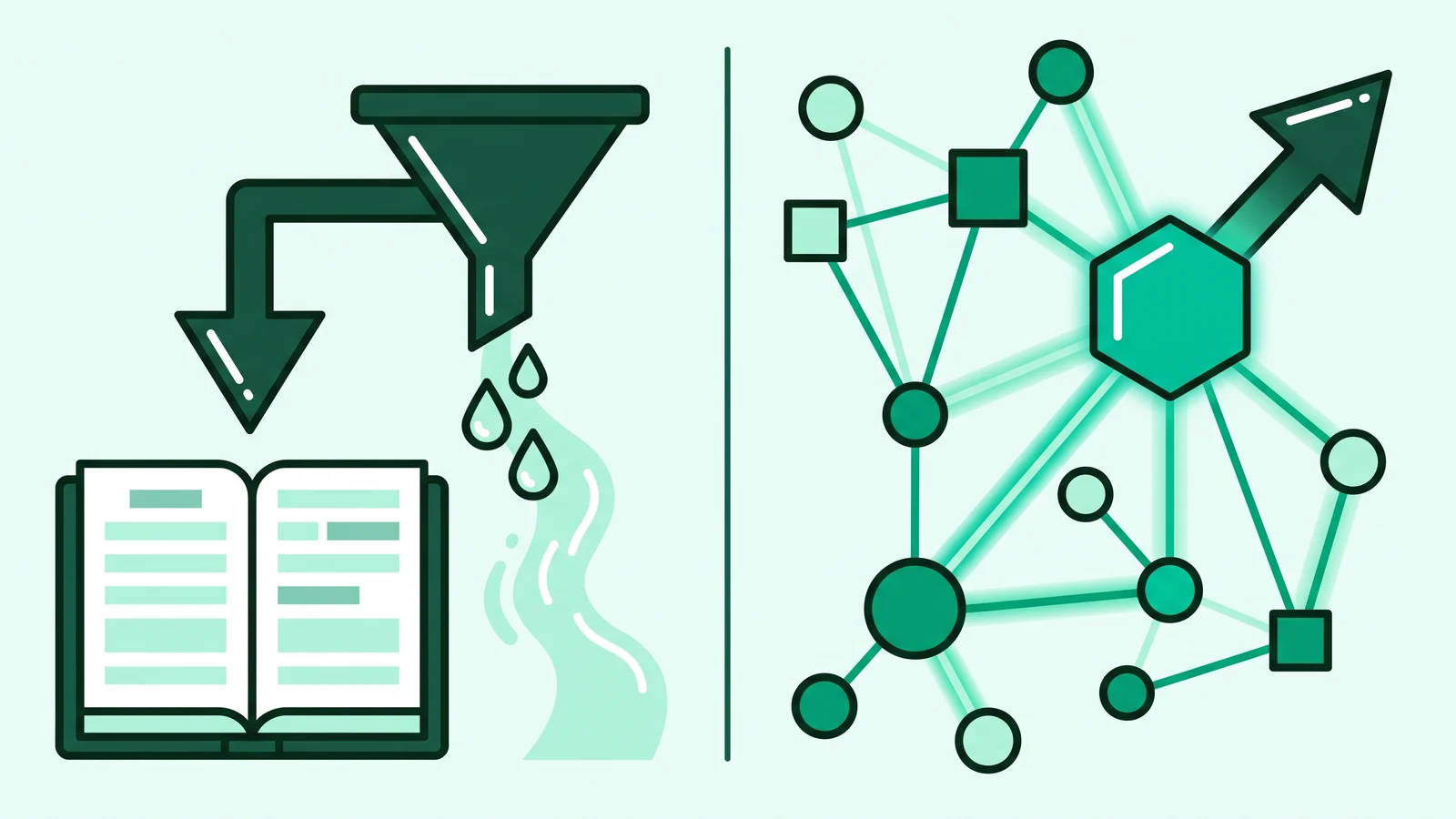
A complete meta-analysis published by John Dunlosky and his colleagues in 2013 in the journal Psychological Science in the Public Interest evaluated ten of the most popular study techniques. The results surprised many educators and students. The most frequently used techniques, such as rereading, highlighting, and summarizing while looking at the book, proved to have low utility.
On the other hand, experimental research by Roediger and Karpicke (2006) proved the strength of the testing effect. Students who actively tested their own memory retained up to 50% more information after one week compared to those who spent the same amount of time merely rereading the material. The human brain strengthens neural pathways not when information enters, but when we try hard to retrieve that information from memory.
Avoid measuring study success by how neat your notes are or how many book pages you have finished reading. Measure your success by how many concepts you can explain again when the book is firmly closed.
The Cognitive Science Foundation of Good Study Habits
Before practicing study techniques at your desk, we need to understand how human cognitive architecture works. Any new information must pass through working memory, which has a very narrow capacity, before it can integrate into long-term memory.
John Sweller, through Cognitive Load Theory, explains that learning failure often happens because our working memory becomes overloaded. Three types of cognitive load are active when we study:
- Intrinsic Load: The natural difficulty level of the material itself. For example, learning basic arithmetic is certainly easier than solving algebraic equations.
- Extraneous Load: Outside distractions or poor material presentation. Examples include phone notifications, television noise, or notes decorated with irrelevant graphics.
- Germane Load: The positive mental energy the brain uses to process information, find patterns, and build new knowledge schemas.
Applying effective study methods means we cut down extraneous load as much as possible so the entire working memory capacity can be allocated to germane load.
Debunking VAK Learning Styles and Using Dual Coding
In many schools, students are often boxed into Visual, Auditory, or Kinesthetic (VAK) learning styles. Visual students are advised to only look at diagrams, while auditory students are told to listen to recordings. Unfortunately, modern cognitive science studies by researchers like Harold Pashler (2008) and Daniel Willingham (2010) prove that this rigid labeling is a neuromyth.
Humans do have personal preferences, but restricting oneself to a single modality actually blocks understanding. Geography material on land contours requires visualization, regardless of whether a student feels they are an auditory type. Conversely, foreign language pronunciation demands auditory processing for everyone.
Instead of limiting yourself to one style, use Dual Coding Theory. Combine verbal explanations (text or voice) with visual representations (flowcharts, concept maps, or structural illustrations) at the same time. When the brain receives information through verbal and visual paths simultaneously, we build two mutually reinforcing memory traces.
If you are interested in seeing how these fast processing principles are packaged into a complete pedagogical framework, you can read my review on 7 fast learning methods in Accelerated Learning that combine mental readiness and active visualization.
4 Main Evidence-Based Effective Study Techniques
After understanding that the brain needs active challenges and freedom from external distractions, you can directly apply these four high-utility methods. These methods apply universally, whether for school students or professionals learning new skills.
Practice the Blurting Technique (Retrieval Practice)
Read a section of material for 10 to 15 minutes with full focus, then close your book. Take a blank sheet of paper and write down all the concepts, definitions, formulas, or flowcharts that stick in your head without peeking at the original source at all.
Once you are completely stuck, open your book again and use a different colored pen to fill in the missed or incorrect parts. That different colored section is your actual knowledge gap.
Apply Spaced Repetition
The human brain will naturally forget new information if it is never recalled. Instead of studying for four solid hours in a single day before an exam, break that time into short sessions spread over several weeks.
Use widening time intervals: study the initial concept on Day 1, do a short self-test without the book on Day 3, work on mixed practice problems on Day 7, and conduct a periodic evaluation on Day 21. This time gap forces the brain to work a little harder when remembering, which actually makes the memory trace more permanent.
Use the Feynman Technique (Elaborative Interrogation)
The best way to test if you truly understand is to teach it back. Take one topic you just learned, then explain it out loud to someone else or in front of a mirror using straightforward language.
Avoid hiding behind technical jargon or memorized sentences from the book. Create simple analogies from everyday life. When your explanation starts to sound convoluted or halts, mark that section because it is an accurate metacognitive signal that your understanding is still shallow.
Do Interleaved Practice
When practicing math, science, or programming problems, do not do 20 problems of the same type in a row (blocked practice). Sequential practice makes the brain work mechanically; you know which formula to use just because you are in that specific chapter.
Mix problem variations from previous chapters in one practice session (interleaving). This approach does feel slower and more challenging at first, but it is highly effective at training the brain to distinguish problem types and select the right solution methods.
For fellow educators or parents guiding teenagers, the four technical steps above can be further adapted through the guide to effective and efficient study methods designed based on adolescent cognitive development traits.
Applying Good Study Habits in Schools through Deep Learning
Learning does not happen in a vacuum. In Indonesia, the pedagogical policy direction introduced by the Ministry of Primary and Secondary Education for 2024 to 2025 emphasizes a transformation toward Deep Learning. This concept fully aligns with cognitive science principles because it rejects surface memorization and focuses on changing students' thinking schemas.
The implementation of effective study methods in schools relies on three main interlocking pillars:
1. Mindful Learning
Students are fully present in class, not just sitting and copying text from the whiteboard. Mindful learning trains students' metacognitive awareness: they understand the learning objectives for the day, focus on the process, and realize which parts they have not yet mastered. Teachers can help this awareness through formative assessments like Exit Tickets at the end of class sessions so students consciously evaluate their understanding levels.
2. Meaningful Learning
New information will disappear quickly if it has no anchor in a student's mind. Meaningful learning happens when both teachers and students actively connect new knowledge with prior knowledge and real contexts in their surroundings. For example, the concept of fractions in elementary school is much more meaningful if it starts with dividing food portions they usually encounter, rather than immediately presenting the formula for common denominators.
3. Joyful Learning
The word joyful here does not mean the class must always contain games without academic substance. Joyful learning presents a meaningful and happy learning experience without excessive cognitive load. When students are under pressure or extreme anxiety, cortisol hormones block access to the prefrontal cortex, which controls reasoning and working memory. A supportive classroom atmosphere keeps students' cognitive gates open.
Practical Tips for Classroom Teachers: Start the lesson with low-stakes quizzing, a short 3 to 5 minute quiz on last week's material without including it in report card grades. This pressure-free quiz relieves student anxiety while collectively activating memory retrieval in the classroom.
To support these three pillars in the classroom, teachers need a structured framework. You can combine them with various types of innovative learning models like Problem-Based Learning or Project-Based Learning so students get used to actively processing material.
Common Study Mistakes and How to Overcome Them
Even though someone already knows retrieval and spaced repetition techniques, old habits often resurface when assignments pile up. Here are three classic mistakes that most frequently ruin study effectiveness, along with steps to fix them.
1. Trapped in the Illusion of Competence
Many learners stop testing themselves once they see their notes are neat and full of highlighters. When reading those notes, the brain feels familiar with the text and mistakes it for true understanding.
Solution: Always test yourself with closed-book recall. Understanding a subject means you are capable of reproducing the concept from your own head without peeking at a cheat sheet.
2. Cramming Overnight
Studying all exam material in one night (massed practice) is the main enemy of long-term memory. When cramming, you are only depositing data into short-term working memory. You might still be able to answer some questions the next morning, but that information will be wiped out again within 24 to 48 hours.
Solution: Divide your study time into consistent, small daily sessions lasting 25 to 45 minutes. Daily study installments are far superior at building memory structures compared to marathon studying overnight.
3. Passive Multitasking with Devices
Many students try to study while turning on social media or listening to videos and podcasts with verbal rhythms in the background. Referring to Cognitive Load Theory, human working memory capacity is very limited (a bottleneck). Forcing two verbal channels to work at the same time will only break focus and drain mental energy before the main material can be processed.
Solution: Keep devices out of sight while studying. Use time management like the Pomodoro Technique: 25 minutes of full focus on a single subject, followed by 5 minutes of total rest.
Frequently Asked Questions (FAQ)
Stop the habit of passive rereading and switch to active self-testing (retrieval practice) and spaced repetition. Close your book after reading, write down the concepts you remember on a blank piece of paper, and then schedule reviews on days 3, 7, and 21 to break the forgetting curve.
The optimal focus duration for working memory ranges from 25 to 45 minutes in a single session. Dividing study time into 25 to 45 minute daily sessions with full focus and no device distractions is much more effective for forming long-term memories than studying in multi-hour marathons.
Rereading only creates an illusion of competence. Your eyes recognize the text on the page, and the brain mistakes that familiar feeling for conceptual understanding. Without the effort of pulling information out of your head independently, memory pathways in the brain do not get stronger.
Passive learning only focuses on absorbing information on the surface of the text, like rereading, highlighting books, or copying notes. In contrast, active learning forces the brain to process and recall information from memory, such as through closed-book practice questions, the blurting technique, and re-explaining concepts in your own words.