Project Based Learning Guide and PjBL Syntax
A practical guide to project based learning steps, quality design, and classroom assessment.
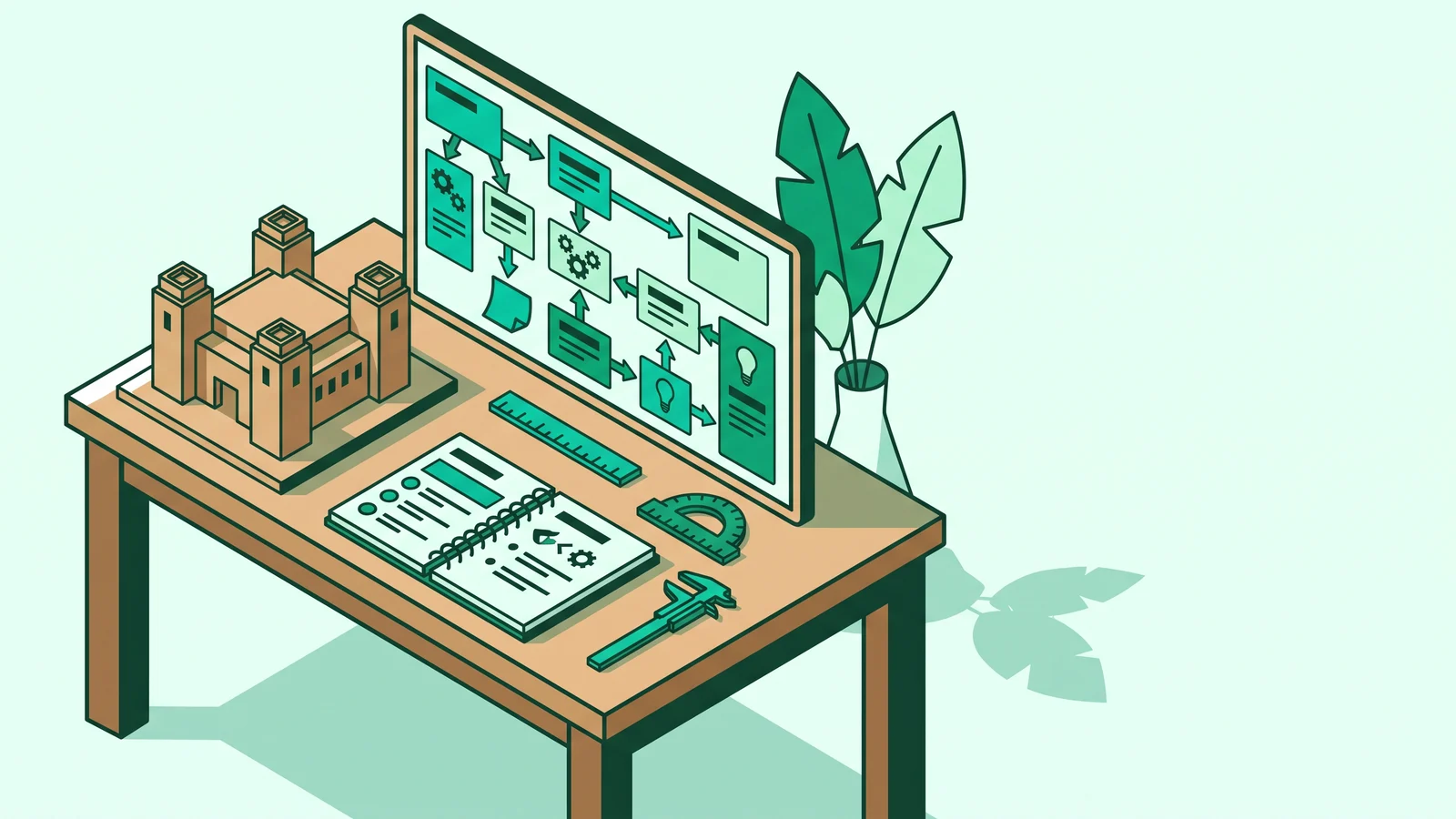
This guide to Project Based Learning (PBL) syntax outlines a learning flow that places students as designers of real solutions. It walks through six structured stages: determining the essential question, designing the project, creating a schedule, monitoring progress, testing outcomes, and evaluating the learning experience to produce a scientifically tested public product.
Many teachers assume that asking students to make crafts at the end of a chapter qualifies as project-based learning. In reality, this is just an extra assignment (a "dessert project") that ends up as a pile of cardboard in the corner of the classroom, lacking any real scientific discovery.
A true project is not judged by how festive its decorations are. Its core value lies in the structured investigation process that tests students' cognitive endurance and teamwork from the very first day the material is introduced.
Understanding the Basic Concepts and Quality Standards of PBL
The Project Based Learning model positions learners as both researchers and solution designers, while teachers act as facilitators and technical consultants. Students do not receive fully prepared material upfront. Instead, they build deep knowledge through continuous investigation of authentic challenges around them.
A quasi-experimental study by Daga et al. in Edukatif: Jurnal Ilmu Pendidikan (2024) on science and social studies learning proved the effectiveness of this model. Classes applying PBL showed higher passing rates, critical thinking skills, and cognitive learning outcomes compared to conventional classes or simple problem-solving methods. If you want to map where this model stands among other pedagogical frameworks, review these types of innovative learning models as a foundation before drafting your teaching modules.
Seven Elements of Gold Standard PBL
PBLWorks (the Buck Institute for Education) formulated a project quality standard known as Gold Standard PBL. To ensure classroom projects do not drift into ordinary craft assignments, your design needs to include these seven design elements:
- Challenging Problem or Question: The project stems from a meaningful problem that sparks curiosity and requires research appropriate to the students' maturity level.
- Sustained Inquiry: Students go through a cycle of asking questions, finding literature sources, testing assumptions, and asking sharper follow-up questions.
- Authenticity: The task context, working methods, tools used, and the impact of the output intersect directly with the real world.
- Student Voice and Choice: Students have the autonomy to determine their working methods, role distribution, and the form of the final product they will build.
- Reflection: Students and teachers periodically review the effectiveness of the inquiry, teamwork quality, and any understanding gaps that arise along the way.
- Critique and Revision: Students give and receive structured feedback to improve draft work before the final assessment.
- Public Product: Students present, exhibit, or hand over their work to an audience outside the classroom walls.
Connection to Merdeka Curriculum and Deep Learning
The strengthening of intracurricular PBL aligns with the Deep Learning policy direction in the Merdeka Curriculum. This approach relies on three interlocking pillars within project activities.
The first pillar is Mindful Learning, which is the full awareness students have when observing environmental problems and identifying what they need to learn to solve them. The second pillar, Meaningful Learning, occurs when students directly experience the benefits of the subject matter in answering everyday life problems. The third pillar, Joyful Learning, grows from the inner satisfaction and enthusiasm students feel while experimenting, debating healthily, and seeing their designs actually work.
Differences Between Project Based Learning, Problem Based Learning, and P5
Confusion often arises when teachers need to differentiate Project Based Learning from Problem Based Learning, or when they mix up subject specific projects with the Pancasila Student Profile Strengthening Project (P5). Understanding the boundaries of these three will save you from making mistakes when drafting assessment indicators.
If you want to study pure problem-solving workflows that focus on case analysis, read the specific discussion on Problem Based Learning stages and practical syntax. Meanwhile, to distinguish their positions in the curriculum structure, review the comparison matrix below.
Official guidelines from BSKAP Kemendikbudristek clarify that intracurricular PBL must assess subject competency mastery. Conversely, P5 focuses on evaluating student character development without the burden of subject matter mastery demands.
Project Based Learning Guide and Syntax in the Classroom
To prevent projects from expanding aimlessly, educators need to follow the Project Based Learning syntax adopted by Kemendikbudristek from The George Lucas Educational Foundation. Skipping the planning and scheduling stages will cause learning time to drag on, eating into hours meant for other materials.
Start with the Essential Question
The teacher opens the class by presenting a contextual phenomenon through a short video, local news, or field observation. From these findings, the teacher and students formulate a driving question that is open ended, challenging, and directly connected to the Learning Objectives (TP).
Design a Plan for the Project
Students gather in working groups to draft a blueprint for solving the problem. They determine the specifications of the product to be made, assign specific roles to each member, choose investigation methods, and list the tools and materials available in their surroundings.
Create a Schedule
Working groups translate their plans into a concrete timeline. Students set milestones, divide the portions for literature research and the prototype assembly phase, and schedule product testing so the entire sequence finishes on time.
Monitor the Students and the Progress of the Project
While the project runs, the teacher walks around checking logbooks and providing formative scaffolding. In this phase, apply the Critique and Revision protocol: ask groups to test each other's product drafts using a simple feedback framework (I like, I wonder, Next steps) before finalizing the work.
Assess the Outcome
Students demonstrate the feasibility and function of their products to an authentic audience, such as school community members, cafeteria managers, parents, or local practitioners. The teacher assesses the achievement of conceptual competencies and work quality using an analytical rubric agreed upon from the start.
Evaluate the Experience
At the end of the cycle, the teacher guides a comprehensive reflection session both individually and as a group. Students analyze the causes of their experiment's failure or success, summarize the new scientific concepts discovered, and evaluate teamwork dynamics to improve future projects.
Schedule brief consultation sessions for each group during every project class hour. Regularly checking these logbooks helps detect conceptual roadblocks and internal group conflicts before they grow into major problems.
Example of PBL Teaching Module Design and Differentiation
Many fellow teachers hesitate to implement Project Based Learning syntax because they worry about having to create multiple separate teaching modules to meet differentiated learning demands. In fact, the PBL structure naturally accommodates differentiation in content, process, and product within the same project flow.
Here is a concrete example of its application for Science or Applied Biology subjects in Phase D (7th Grade) and Phase E (10th Grade):
- Topic / Learning Outcomes: Environmental Change and Organic Waste Management.
- Essential Question: "How can we turn leftover school cafeteria waste into a local food security solution?"
- Time Allocation: 3 Weeks.
Executing Project Based Learning Steps
In the First Week (Syntax 1, 2, and 3), the teacher shows an investigative video about food waste in the school cafeteria, then students formulate hypotheses and sub-questions. When designing the project, the teacher applies content and product differentiation: each group is free to choose eco-friendly biotechnology references based on their interests and tool availability, such as making aerobic compost, eco-enzyme liquid, or cultivating Black Soldier Fly (BSF) maggots.
Next, the teacher applies process differentiation based on students' learning readiness. Groups that still need guidance receive a scaffolded worksheet containing step-by-step instructions. Meanwhile, independent groups draft their own experimental protocols referring to scientific literature they find. All groups then use a Kanban board or Gantt chart to divide the three-week deadline: material research in the first week, fermentation or creation in the second week, and soil nutrition testing in the third week.
Entering the Second Week (Syntax 4), students assemble processing containers and monitor the ongoing biochemical processes. The teacher checks the logbooks and monitors the temperature and humidity parameters of the fertilizer. If a group's fermentation process is hindered, the teacher does not immediately dictate the solution but instead asks guiding questions so students can analyze where the variable error lies themselves.
In the Third Week (Syntax 5 and 6), students test the product's effectiveness on soil quality and display it in a class exhibition in front of cafeteria managers and the principal. The cycle closes by analyzing the successes and failures of the biochemical processes that occurred, while also reflecting on the group collaboration dynamics over the three weeks.
For those of you who want to ensure the terms for models, approaches, and methods are written accurately in your class administration documents, please review the guide on differences between learning models, strategies, methods, and techniques.
Authentic Assessment Instruments and Rubrics for PBL
Assessment in PBL should not rely solely on the final product score. An excessive focus on the visual beauty of the work will trap students into simply buying ready-made items or handing over the work to the most skilled member.
Use the PBL assessment rubric matrix below to balance the capture of scientific concept mastery, product quality, and student self-regulation skills:
Never average out group scores for all members without checking evidence of individual contributions. Combine the teacher rubric above with self-assessment, peer-assessment, and individual contribution tracking through personal logbooks to prevent unfairness toward hardworking students.
Four Common PBL Pitfalls and How to Overcome Them
Running projects in class requires strict time management and monitoring. Here are the four most common mistakes that ruin the essence of PBL, along with their tactical solutions in the field:
1. Getting Trapped in a "Dessert Project"
Many educators spend three full weeks lecturing on theory, then assign students to make crafts or models at the end of the semester. This practice is not true PBL, but merely a closing assignment.
Solution: Turn it into a Main Course Project. Launch the driving question right at the first meeting so students learn the core concepts and materials through the project workflow from start to finish.
2. The Emergence of Free Riders
When group scores are averaged for all members without binding role divisions, one or two diligent students end up doing all the work, while the rest just attach their names.
Solution: Require each member to hold a specific responsibility starting from Syntax 2 and monitor this through personal logbooks. Combine teacher observation with self-assessment and peer-assessment to ensure fairness in the final score.
3. Dazzled by Aesthetics and Ignoring Learning Outcomes
Students often get high marks just because the poster or miniature they submit looks beautiful, even if the basic concepts behind the work are wrong.
Solution: Place the largest grading weight in the rubric on conceptual material mastery, critical reasoning, and scientific work methodology, not on the luxury of display materials.
4. Uncontrolled Time Allocation
Overly ambitious projects often drag on for weeks, cutting into the hour allocation for subsequent learning materials.
Solution: Apply strict milestone check-ins during Syntax 3 and Syntax 4. If the project scope is too broad, immediately scale it down so students can still complete functional testing on time.
Frequently Asked Questions (FAQ)
Problem Based Learning syntax starts with problem orientation and ends with conceptual or analytical problem-solving. Conversely, Project Based Learning syntax starts with a fundamental question, requires design planning and phased scheduling, and produces a real product tested empirically in front of the public.
No. Intracurricular PBL is tied directly to the Learning Outcomes (CP) and Learning Objectives (TP) of specific subjects. P5 is cross-disciplinary, co-curricular, and focuses on strengthening the Pancasila Student Profile dimensions without being tied to subject report card grades.
No. PBL products can be digital works (educational videos, apps, podcasts, websites), written policy recommendation documents, pocket books, social advocacy campaigns, or demonstrations of real action that answer the initial challenge.
Use an analytical rubric that separates process scores (inquiry activity, scientific work, collaboration) and product scores (work quality, concept accuracy, usefulness). Supplement the teacher's assessment with personal logbook checks and peer reviews.