Kinesthetic Learning Methods Transform Modern Classrooms
Discover how kinesthetic learning transforms classroom dynamics into active collaboration.
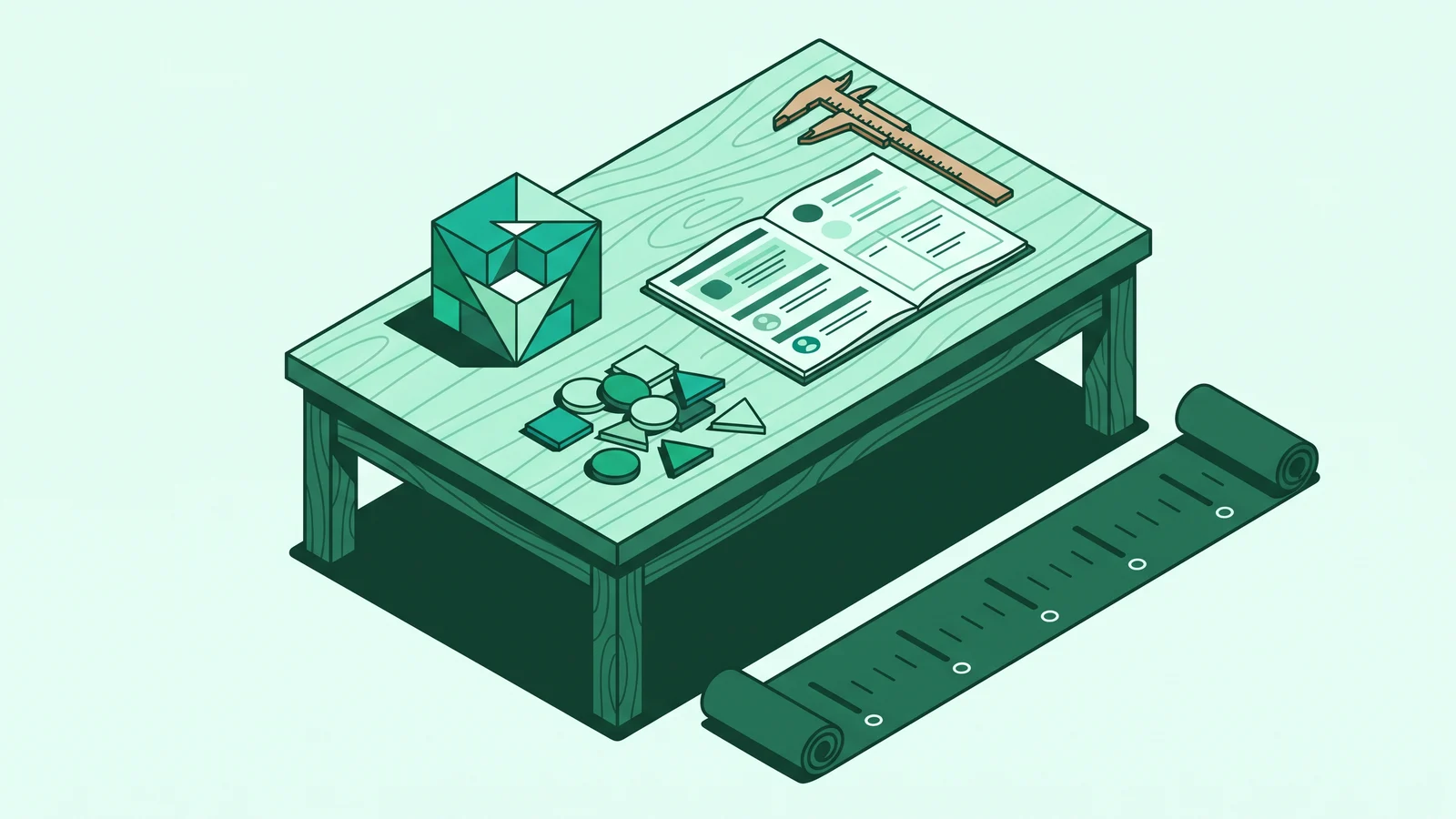
Kinesthetic learning is the key to an interactive classroom that transforms passive, one-way teaching into a lively space for physical exploration. This modality helps learners absorb, process, and lock in information through motor movement, concrete object manipulation, and hands-on practice. As a result, abstract concepts stick more easily in students' long-term memory.
In both primary and secondary classrooms, students who constantly shake their legs, tap their pencils, or walk to a friend's desk often get labeled as disruptive. In reality, these motor impulses are the brain's biological mechanism to maintain cognitive focus. When teachers validate this need for movement, classroom management transforms from policing bodies to orchestrating participatory learning.
This movement-based approach aligns closely with modern student-centered curricula. Integrating physical activity into lessons is not just a time-filler or icebreaker. Instead, it is a practical form of process and product differentiation that solves conventional learning burnout.
Why Kinesthetic Learning Creates an Interactive Classroom
Traditional classrooms usually place students in a "sit and listen" mode. This one-way pattern quickly triggers cognitive boredom, shortens attention spans, and ultimately causes behavioral disruptions in the room.
The principle that kinesthetic learning creates an interactive classroom works by shifting the center of gravity from the whiteboard to the students' hands and body movements. By assembling props, role-playing, or moving between observation stations, they stop being passive spectators.
Interactivity grows organically because the task structure demands physical collaboration. Students discuss while measuring real objects, debate healthily while organizing historical event cards on the floor, and correct each other when practicing science experiment procedures. Physical energy that used to waste away as restlessness now funnels directly into academic problem-solving.
Differentiating Tactile and Kinesthetic Pathways
Education practitioners often treat the terms tactile and kinesthetic as the same, even though they work on different motor scales. Understanding the difference helps teachers design precise activities in their lesson plans.
The tactile pathway relies on the fine sense of touch on the skin surface, especially the fingertips. Tactile activities include feeling the different textures of rocks, shaping land topography with clay, or assembling small electronic components.
In contrast, the kinesthetic pathway involves large muscle coordination, joint receptors (proprioception), balance, and full-body spatial orientation. A clear example is when students jump on a giant number line on the classroom floor to understand positive and negative integer operations. In an effective classroom, both pathways merge to strengthen complete conceptual understanding.
Theoretical Evolution: From VARK Boxes to Embodied Cognition
The pedagogical foundation for movement-based learning has long been laid by global education figures. Jean Piaget stated that a child's logical thinking structures grow from the sensorimotor and concrete operational stages. Children need to manipulate real objects before they can process abstract symbols on paper.
Howard Gardner later expanded this view through his Multiple Intelligences theory by defining bodily-kinesthetic intelligence. Gardner positioned the ability to process body movements and manipulate physical objects on the same level as logical-mathematical or linguistic intelligence. Meanwhile, Neil Fleming's VARK (Visual, Auditory, Read/Write, Kinesthetic) model mapped out that some learners need physical reality-based connections like demonstrations and field simulations.
However, modern cognitive science brings critical updates that every educator must understand. Rigidly boxing students into a single learning style has proven to be a neuromyth. Recent research shifts toward the theory of Embodied Cognition, as heavily studied by education researchers like Nathan (2021) and Shvarts and Abrahamson (2023).
Embodied Cognition proves that human cognition roots directly in the physical interaction between the body and the surrounding environment. The brain does not work separately from the body. A recent meta-analysis by Liu et al. (2025) of over 40 empirical studies also confirms that embodied learning approaches provide moderate to significant positive impacts on academic performance and concept retention compared to passive learning methods.
Another study by Bentley, Walters, and Yates (2023) shows that using structured hand gestures and physical manipulation helps students understand microscopic science phenomena and abstract concepts much more clearly. In line with modern learning and assessment guidelines, teachers conduct initial diagnostic assessments to map students' readiness, interests, and learning profiles. This mapping is not a tool to permanently label students, but a foundation to build lesson modules with a variety of multisensory learning modes.
Never label a student as "a kinesthetic kid who cannot read text". Use physical activities as a gateway to understanding concepts, then guide them to translate those physical experiences into writing, graphs, and symbolic formulas.
Changing the Stigma: From Hyperactive Kids to Classroom Participation Assets
Many teachers complain about students who cannot sit still for fifteen minutes. These children often receive harsh reprimands or are assumed to have attention disorders. If we change our pedagogical lens, these motor behaviors are actually a signal that classroom teaching methods are too monotonous for their nervous systems.
Recognizing the characteristics of a kinesthetic learning style preference requires careful observation during the learning process:
- Using intensive gestures: Students move their hands expressively when trying to explain complex ideas or find the right vocabulary.
- Moving to think: They tap their fingers on the desk, swing their legs, or choose to stand next to their chairs when solving challenging questions.
- Strong muscle memory: Students accurately remember experimental procedures or storylines they have acted out, but easily forget sequential verbal instructions.
- Enthusiastic about manipulatives: Their attention centers immediately when the teacher brings out three-dimensional props, real specimens, or assembly kits.
When facilitated through the right task architecture, children initially seen as troublemakers actually emerge as the driving force of the group. They become demonstration leaders, agile prop operators, and discussion drivers through physical modeling.
Comparison Matrix of Learning Modalities in a Classroom Context
The following table maps the differences between sensory media characteristics and how to integrate them into an interactive classroom scenario so no student profile gets left behind.
Differentiated Movement-Based Learning Strategies
Applying the principle that kinesthetic learning creates an interactive classroom in daily practice requires a systematic framework. Teachers can combine various innovative learning models with content, process, and product differentiation strategies.
1. Content Differentiation with Manipulative Media and Loose Parts
Theoretical subject matter needs to be presented in a form that students can touch and tweak. We do not need expensive laboratories to make this happen. Using loose parts or cheap items around the school is more than enough.
In primary school math, teachers can introduce the concepts of 3D shapes and fractions using scrap cardboard, Dienes blocks, string, or pebbles. In language classes, students can study active and passive voice using magnetic word cards that they stick and slide directly on the whiteboard.
2. Process Differentiation Through Movement-Based Learning Models
The core of process-differentiated learning lies in how students actively process new information. The following three active learning strategies prove effective in maintaining the classroom's energy rhythm:
- Station Rotation: Divide the classroom into three to four separate stations. The first station contains illustrated reading materials, the second provides physical experiment tools, the third becomes a role-play or drama corner, and the fourth holds digital challenges or group quizzes. Every 15 minutes, ring a bell to signal groups to physically move to the next station.
- Gallery Walk (Moving Art Exhibition): After groups finish a project or problem-solving task on flip chart paper, stick the results on the classroom walls. Students walk around like they are visiting an art gallery, observing other groups' work, and attaching constructive feedback using sticky notes.
- Dynamic Simulation and Role Playing: Turn abstract concepts into human movement scenarios. When facilitating Discovery Learning and Inquiry stages for class for biology material like the circulatory system, make a marked route on the classroom floor. Assign students roles as erythrocytes, oxygen, and heart chambers moving along the route to model blood flow.
Apply the Total Physical Response (TPR) technique to memorize sequential concepts or foreign terms. Agree on one specific hand gesture for each key concept, such as spreading both arms wide for an obtuse angle and bringing elbows close together for an acute angle.
3. Product Differentiation and Performance Assessment
If the learning process is physically active, the assessment process should not fall back solely on multiple-choice paper-and-pencil tests. Open a space for students to demonstrate their mastery of Learning Outcomes through real work and performance assessments.
Integrate this approach with the Project Based Learning guide and PjBL syntax. Students can prove their understanding of ecosystems by designing dioramas from recycled materials, building scale models, or directly practicing experiment procedures in front of the class.
Teachers evaluate students using measurable performance assessment rubrics. Rubric indicators do not judge students' artistic talents, but rather their adherence to work procedures, accuracy in manipulating tools, teamwork, and ability to elaborate on the theoretical concepts behind their movements or created products.
The Cognitive Bridge: From Body Movement to Symbolic Abstraction (HOTS)
One major flaw in practical kinesthetic teaching is stopping the learning process at the physical fun stage. Students happily run around executing simulations but fail when asked to complete written evaluation questions.
We must build a bridge connecting body movements to Higher Order Thinking Skills (HOTS) at the synthesis and evaluation stages. From a cognitive development perspective, this is the transition from direct action experiences to image visualization, finally ending in the mastery of abstract symbols like formulas, numbers, and text.
For example, after students finish practicing number line simulations on the floor or buying and selling in class (physical movement stage), do not close the lesson immediately. Ask them to sit quietly for ten minutes to draw an activity scheme in their notebooks (visual stage), then guide them to formulate the mathematical equation along with a written conclusion (symbolic stage). Physical movement functions as an experiential anchor that helps the brain construct abstract formulas.
Flexible Classroom Layout Design and Active Classroom Management
Realizing the idea that kinesthetic learning creates an interactive classroom in standard-sized rooms with 30 to 40 students requires space management and firm rules. Without layout engineering, physical activities can easily spark chaos.
Change conventional lined-up desk layouts into flexible seating arrangements that support mobility:
- Horseshoe Formation: Arrange tables along the classroom walls, leaving a large empty area in the middle of the room as a stage for simulations, tool demonstrations, or role-playing.
- Group Clusters with a Standing Zone: Arrange desks in groups, but provide one slightly higher desk or a special area at the back of the class. Allow students who start feeling stiff or sleepy to stand briefly in that zone while still paying attention to the lesson and taking notes.
- Experiment Carpet Corner: Provide an area with a carpet or folding mat in the corner of the room to store loose parts boxes and manipulative props.
To maintain order during activities, build classroom management routines agreed upon together from day one. Set clear physical area boundaries and performance targets per time duration. Use non-verbal or rhythmic silence signals, such as a specific clapping pattern or a small bell sound. When the signal sounds, all students must stop their hand movements, put down their props, and direct their eyes to the teacher within five seconds.
Practical Steps to Design Movement-Friendly Lesson Plans
For teachers looking to build or modify lesson plans to be more interactive and friendly for active learners, follow this structured design flow.
Analyze Learning Outcomes and Learning Objectives
Identify the operational verbs in the Learning Objectives. Mark which core concepts are procedural or spatial, making them suitable to translate into physical activities or real-world object manipulation.
Design Physical Triggers in Initial Activities
Replace lecture-based apperception with five-minute motor activities. For instance, ask students to stand and form line density formations inside the classroom to model the different particle arrangements of solids, liquids, and gases.
Prepare Active Exploration-Based Core Scenarios
Structure core activities using learning station rotation patterns, gallery walks, or concrete object experiments. Ensure every group member gets a clear physical role, such as worksheet distributor, prop operator, board note-taker, and spokesperson.
Insert Scheduled Brain Breaks
For long lesson sessions, schedule short, structured movement breaks every 20 to 25 minutes. Use simple stretching or rhythmic movements to refresh students' focus before moving on to the next material.
Lock in with Reflection from Movement to Text
Close the lesson with a guided reflection session. Guide students to write down concept conclusions on a worksheet based on what they just experienced and felt through the physical activity.
Four Common Mistakes When Facilitating Kinesthetic Students
To ensure classroom teaching runs effectively and meets curriculum targets, avoid these four frequent pedagogical traps:
Allowing Movement Without Rules (Chaos): The most fatal mistake is letting students run around aimlessly without a clear learning direction. Every movement instruction must have a time limit, silence signal rules, and measurable concept understanding targets.
- Falling into the Labeling Trap: Assuming students with kinesthetic preferences are completely unable to learn through reading or writing. Remember that kinesthetics is a gateway to understanding concepts, but students still need training to construct verbal and numerical abstractions through a multimodal approach.
- Limiting Kinesthetics to Only Sports and Arts: Assuming theoretical subjects like History, Algebraic Formulas, or Grammar cannot be taught kinesthetically. In reality, assembling magnetic word cards, using body gestures, or practicing Total Physical Response (TPR) are highly effective forms of kinesthetic learning for abstract materials.
- Assuming Kinesthetic Media is Always Expensive: Delaying active learning because the school does not yet have sophisticated laboratories. Pebbles, dry leaves, scrap cardboard, plastic bottles around the school, and the students' own body movements are powerful, free kinesthetic media.
Frequently Asked Questions (FAQ)
Students with kinesthetic tendencies usually tap their fingers or move their legs while thinking, get bored quickly if they have to sit still listening to a lecture for more than 15 minutes, like touching objects or props, and remember information much better after practicing it directly.
Apply small group rotation strategies (station rotation), give active role assignments to each student (like worksheet distributor, board note-taker, or tool operator), set firm silence signals, and insert movement breaks (brain breaks) every 20 to 25 minutes.
Tactile learning focuses on the sense of touch and fine hand manipulation, like writing, assembling small components, or touching object textures. Meanwhile, kinesthetic learning involves overall body motor coordination and spatial movement orientation, like role-playing, field simulations, or moving between learning stations.
Teachers can use observation checklists while students practice, score live demonstration presentations, have students build 3D physical models or prototypes, and run case scenario solving simulations in front of the class.